Scroll


Technology Challenges & Gaps
Lasers
-
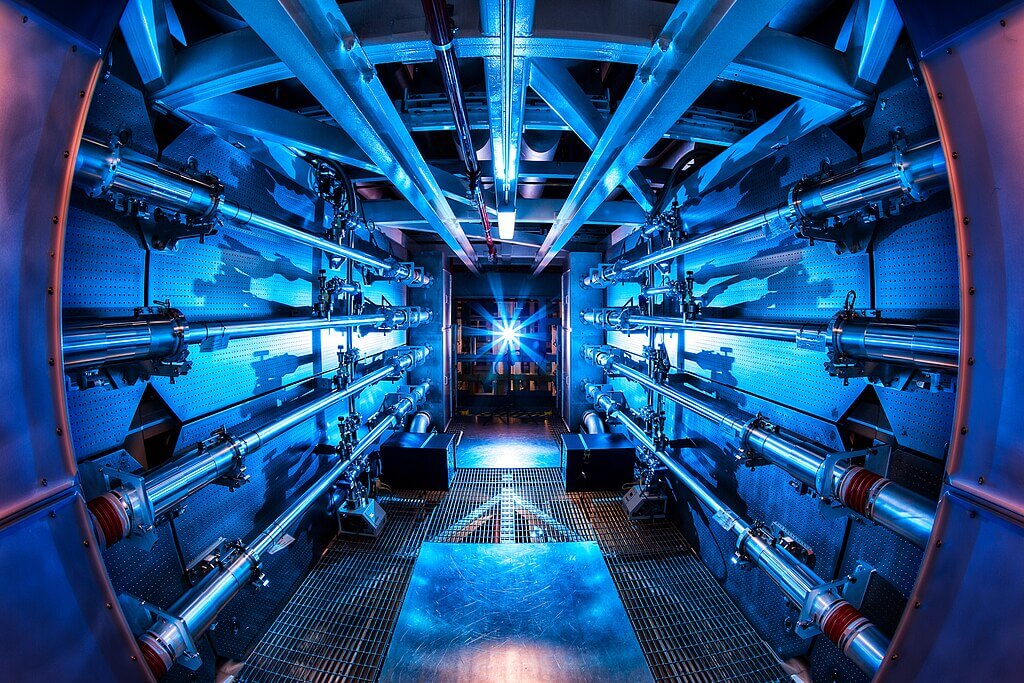
 Laser-driven inertial fusion targets are designed to compress and heat fusion fuel using intense laser beams focused symmetrically onto a small capsule. These targets often consist of a spherical shell containing deuterium-tritium (DT) fuel. For inertial fusion energy (IFE), laser fusion targets must balance high performance with manufacturability, requiring simplified geometries, robust materials, and compatibility with high repetition-rate operation.
-
How can laser-driven targets be designed to achieve high fusion performance while remaining manufacturable and compatible with high-repetition-rate operation?

Technology Challenges & Gaps
Pulsed Power
-
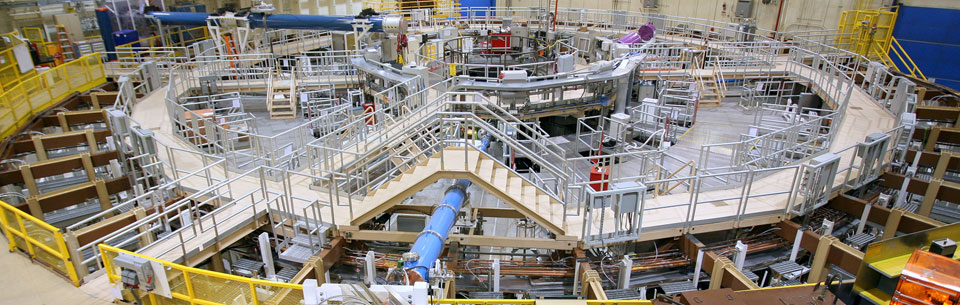
Pulsed power fusion targets are optimized for drivers that deliver extremely large electrical currents over very short timescales. In magnetized target fusion and z-pinch concepts, the target may include conductive liners, wire arrays, or magnetized fuel assemblies designed to implode under intense electromagnetic forces. These targets must withstand rapid acceleration, electromagnetic loading, and plasma instabilities while maintaining precise geometry throughout compression. Future IFE systems based on pulsed power technologies will require targets that are inexpensive, durable, and compatible with rapid injection and chamber clearing cycles.
-
How can pulsed-power target designs withstand intense electromagnetic forces and plasma instabilities while maintaining the symmetry and stability needed for high-gain fusion?
Technology Challenges & Gaps
Heavy Ions
-
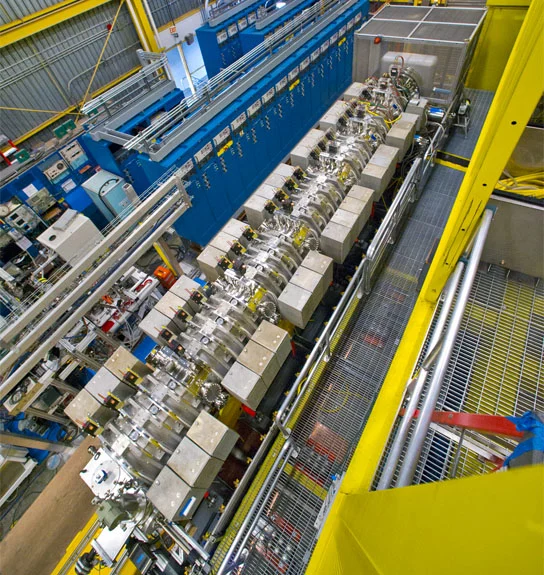
Heavy ion fusion targets are designed for compression by energetic ion beams generated by particle accelerators. Because heavy ion beams deposit energy deeply and efficiently into matter, these targets often incorporate layered structures and radiation converters to achieve uniform implosion conditions. Heavy ion targets benefit from potentially high driver efficiency and relaxed chamber environment requirements, but they also demand extremely accurate beam focusing and target positioning. The target architecture must support repeatable high-gain performance while remaining suitable for mass production and automated handling.
-
How can heavy-ion target designs achieve the required energy-deposition uniformity and implosion performance while supporting high-repetition-rate operation and automated handling?
Technology Challenges & Gaps
Target Manufacturing and Scalability
-
To meet the demands of large-scale operation required for IFE, target designs must be streamlined, and manufacturing processes must be scaled to produce vast quantities at low cost and high yield. While current fabrication techniques focus on precision and small batches for experimental purposes, an IFE system will require between 100,000 and 1,000,000 targets per day. This calls for the development of standardized, cost-effective production methods, alongside efficient characterization systems to ensure rigorous quality control throughout the process.
-
Future manufacturing systems will likely rely heavily on automation, precision microfabrication, advanced materials processing, and real-time inspection technologies. Scalable target production therefore represents one of the central engineering challenges on the path toward practical fusion energy.

Target Injection, Tracking, and Engagement
-
In addition to manufacturing, target injection, tracking, and engagement are vital components of an IFE system. Unlike discovery science experiments, which operate at low shot rates with stationary targets, IFE demands the injection of targets at high rates—typically between 1 and 10 Hz—into the fusion chamber. Real-time tracking and precise steering systems are essential for monitoring the target’s position and velocity to ensure the driver beams can accurately engage the target in motion.
-
The integration of injection systems, optical diagnostics, beam steering, chamber protection, and debris management will ultimately determine whether IFE facilities can operate reliably at commercial power plant repetition rates