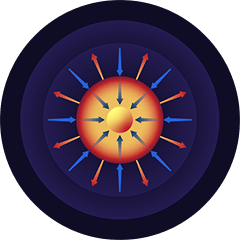
Hot Spot Ignition

Four Stages of Fusion Ignition & Burn

Follow the physics of how energy is transferred to the target to compress, ignite, and sustain fusion burn.

Heating Phase

Powerful laser beams or X-rays strike the target surface, rapidly heating the outer layers to millions of degrees. This intense energy ablates the capsule shell, creating an inward-moving shock wave.

Compression Phase

The shock wave drives inward, compressing the fuel to extreme densities. The spherical capsule design ensures uniform pressure from all directions, concentrating the fuel toward the center.

Ignition Phase

Powerful laser beams or X-rays strike the target surface, rapidly heating the outer layers to millions of degrees. This intense energy ablates the capsule shell, creating an inward-moving shock wave.

Burn Phase

At peak compression, the fuel reaches the threshold conditions—density and temperature sufficient for fusion reactions to begin. A hot spot forms at the core where nuclei fuse and release energy.
Scientific Relevance

Science Challenges & Gaps

  • Check circle icon
    How can we optimize energy coupling from driver to target to achieve necessary fuel densities and temperatures?
  • Check circle icon
    How can increased laser bandwidth and advanced pulse shaping improve coupling efficiency and mitigate laser-plasma instabilities?
  • Check circle icon
    How can we address sensitivities to implosion hydrodynamic instabilities, and what are the most effective strategies to reduce mix of ablator/liner into fuel?
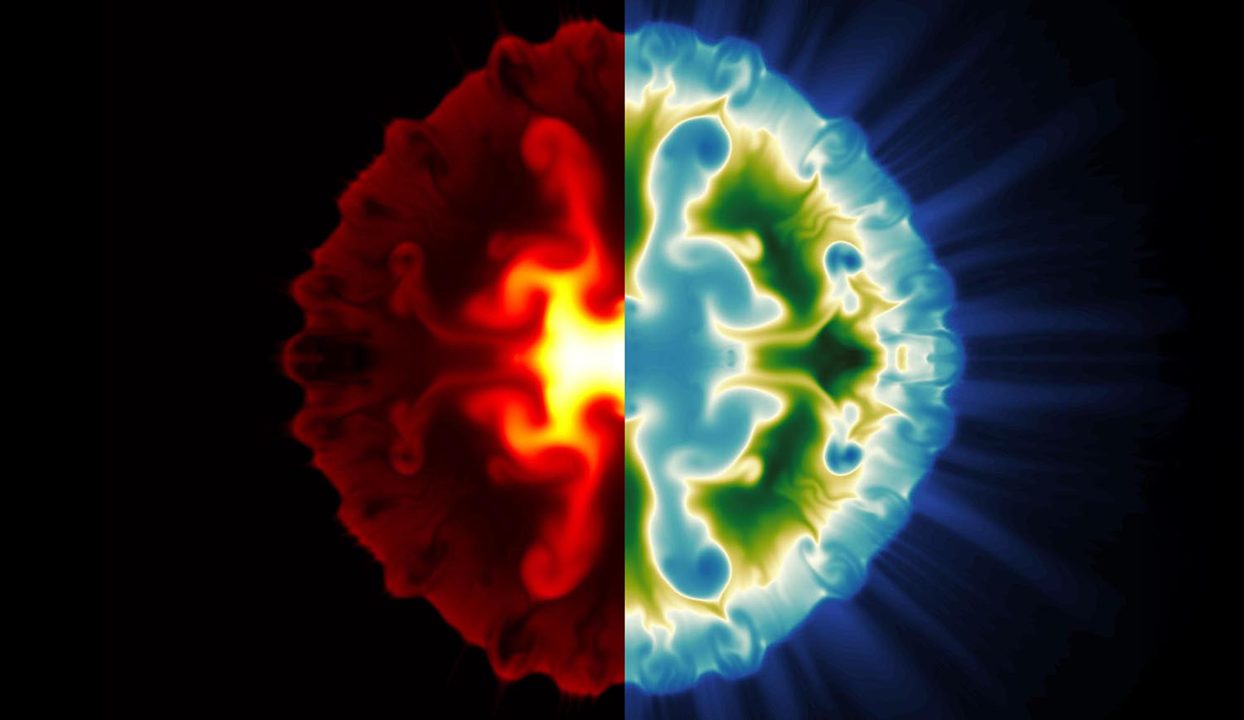
Simulated fusion capsule implosion