Welcome to the U.S. Inertial Fusion Energy Ecosystem
Connecting Research, Innovation, and Talent to Shape the Future of Fusion Energy.
500+
Researchers across academia, national laboratories, and industry
80+
Partner institutions worldwide
Discover U.S.IFE in Action
Scroll for more
Roadmap
The U.S. Fusion Science and Technology Roadmap
BUILD: Build a strong foundation for fusion by advancing core plasma science, developing enabling technologies, and investing in world-class research facilities.
INNOVATE: Innovate through public–private partnerships, cross-disciplinary collaboration, and rapid testing of new concepts to accelerate breakthroughs in fusion energy systems.
GROW: Grow the fusion ecosystem by expanding the workforce, strengthening supply chains, and supporting commercialization pathways to bring fusion power closer to reality in the United States.
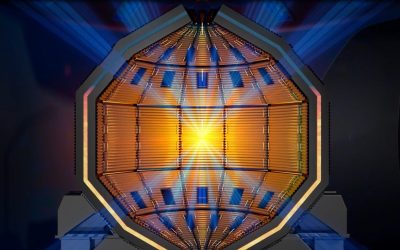
For any fusion energy system, achieving a burning plasma is essential for self-sustaining fusion. A burning plasma is a state where fusion reactions provide most of the heat needed to sustain the process. Inertial fusion energy targets are central to these systems, as they contain the fuel that transitions into a burning plasma. Their design and physics are critical for compressing, heating, and igniting the fuel to release fusion energy. It is within these targets that this transformation occurs.
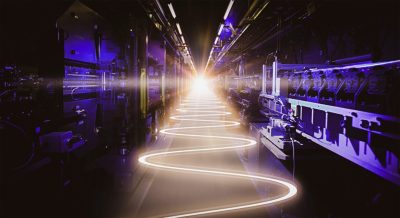
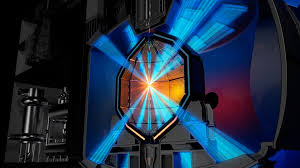
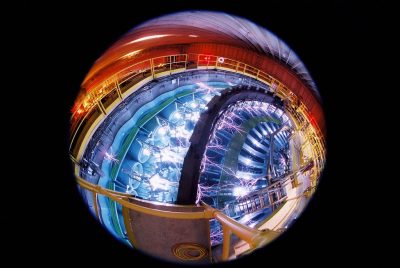
In Inertial Fusion Energy systems, the fusion process is initiated by external energy sources known as drivers, which include high-energy lasers, ion beams, or electromagnetic compression devices. For instance, the National Ignition Facility driver is one of the most complex optical systems, featuring 192 laser beams. It is a marvel of engineering and successfully fulfills its intended mission. For IFE to become a practical power source, drivers must be designed with the energy mission in mind. It is crucial that IFE drivers, including electromagnetic compression devices, operate at high repetition rates, at low cost, and with acceptable efficiencies.
In IFE systems, the fusion process relies on precisely engineered targets that contain fusion fuel and enable the extreme conditions required for ignition and high fusion gain. These targets may take different forms depending on the driver and confinement approach.
For inertial fusion energy to become a viable energy source, development needs to go beyond just improving target design (fuel) and drivers (such as lasers, pulsed power, or heavy ions). It’s also essential to focus on other key components, such as the reaction chamber, fuel cycle, functional materials, structural materials, blanket technologies, and the overall system’s maintenance and integration.
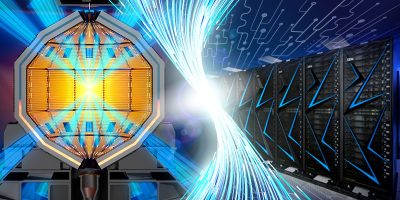
Advanced modeling, simulation, and artificial intelligence will be essential for accelerating Inertial Fusion Energy development by integrating the many coupled processes spanning target design and fabrication, driver-target interactions, fusion burn, chamber response, materials, and power-plant operation. High-fidelity multiphysics simulations, combined with experimental data and AI-enabled models, can accelerate the design-build-test cycle, explore large design spaces, quantify uncertainties, and guide experiments. The long-term goal is a validated digital twin of an IFE system that connects target and driver physics to component lifetime and overall plant performance.
The Inertial Fusion Science and Technology (RISE) Hub is led by Colorado State University (CSU). The Hub focuses on four key areas: theoretical design of Inertial Fusion Energy (IFE) concepts, experimental technology development, IFE target innovation, and validation of fusion concepts. This initiative will explore both krypton fluoride (KrF) and solid-state laser drivers, with an emphasis on high efficiency and innovative target designs. The RISE Hub leverages state-of-the-art facilities, such as Xcimer Energy’s Phoenix facility, to conduct experiments in high-energy laser physics, as well as CSU’s ALEPH laser to improve coupling efficiency with fusion targets. Significant upgrades supported by project partners will further enhance these capabilities, enabling the exploration of advanced target physics and the development of scalable technologies for IFE energy systems. Additionally, the initiative emphasizes workforce development by training future scientists and engineers to support the advancement of fusion technologies in alignment with the Department of Energy’s fusion energy mission.is led by the University of Rochester’s Laboratory for Laser Energetics with a long history in high energy density science and inertial confinement fusion. This collaborative initiative unites experts from renowned institutions, including UCLA and the University of Nebraska-Lincoln, alongside private sector innovators such as Ergodic, LLC, and Xcimer Energy, Inc. By leveraging diverse expertise, IFE-COLoR aims to enhance the foundational elements of IFE science and technology, focusing on efficient energy coupling to fusion capsules and improving fusion performance.sollicitudin interdum.
The Inertial Fusion Energy Consortium on Laser-Plasma Interaction Research (IFE-COLoR), is led by the University of Rochester’s Laboratory for Laser Energetics with a long history in high energy density science and inertial confinement fusion. This collaborative initiative unites experts from renowned institutions, including UCLA and the University of Nebraska-Lincoln, alongside private sector innovators such as Ergodic, LLC, and Xcimer Energy, Inc. By leveraging diverse expertise, IFE-COLoR aims to enhance the foundational elements of IFE science and technology, focusing on efficient energy coupling to fusion capsules and improving fusion performance.sollicitudin interdum.
The STARFIRE Hub, led by Lawrence Livermore National Laboratory (LLNL), brings together world-class expertise to advance inertial fusion energy. As a premier Department of Energy (DOE) laboratory and home to the National Ignition Facility (NIF), LLNL provides a strong foundation for this ambitious initiative. Through a collaborative, multi-institutional approach, the STARFIRE Hub aims to accelerate IFE progress in close collaboration with the U.S. IFE private sector.sollicitudin interdum.
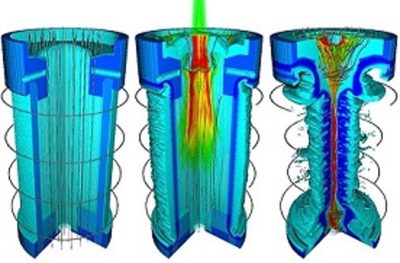
The DEEP IFE Hub, led by Sandia National Laboratories, focuses on advancing pulsed-power technologies for commercially viable fusion energy. The Hub addresses four key areas: repetition-rate pulsed-power drivers, advanced transmission-line technologies, computational modeling and target design, and post-shot environmental effects on driver-target coupling. The initiative investigates transmission lines that enable driver standoff, reduce debris, and maintain efficient energy delivery to fusion targets. Computational and experimental studies explore target stabilization, energy-transfer physics, and layered and graded-density target designs to improve coupling efficiency. The Hub also characterizes how electrical pulses and chamber conditions affect post-shot environments. Leveraging partnerships across national laboratories, academia, and industry, DEEP coordinates solutions to shared pulser IFE challenges while prioritizing workforce development.sollicitudin interdum.
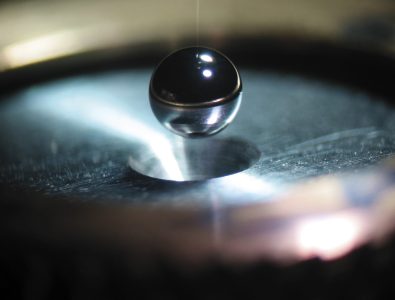
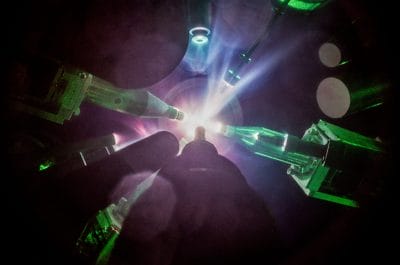
Target Fabrication and Pre-implosion Diagnostics for Laser Inertial Confinement Fusion Research Using Two-Photon Polymerization and Cryogenic Coherent Anti-Stokes Raman Scattering Microscopy
Find answers to common questions about inertial fusion energy research and participation.
What is inertial fusion?
Inertial fusion is an approach to achieve controlled nuclear fusion by compressing and heating a small pellet of fusion fuel, typically deuterium and tritium, to extreme temperatures and pressures, often exceeding those inside the core of our sun.
What is the goal of inertial fusion research?
The primary goal is to achieve controlled nuclear fusion reactions that release more energy than is required to initiate and sustain the process. This could provide a nearly limitless, clean, and sustainable source of energy.
What are the main components of an inertial fusion system?
Inertial fusion systems typically involve a laser, pulsed power, or ion beam system to compress and heat the fuel pellet, a target chamber, diagnostics to monitor the process, and various support systems.